

Lawyers for Nature is a non-profit organisation working to reimagine the law for Nature. We advocate for Rights of Nature, with the aim of recognising Nature as a subject of law rather than an object. We campaign for changes in law and policy, support communities protecting nature, and work to ensure that decision-making which impacts Nature is lawful.
Biodiversity Net Gain (BNG) is not a perfect solution to the Nature crisis, and it requires robust safeguards to ensure it genuinely benefits Nature. However, it was introduced to help turn the tide on biodiversity decline, and it is now an essential tool that must be strengthened, not dismantled through sweeping exemptions that would render it largely ineffective.
The Government’s proposed changes to BNG therefore strike at the heart of our mission, because weakening the safeguards designed to support habitat recovery both undermines Nature’s interests and raises serious questions about the lawfulness of the process. The proposed changes would exempt most small development sites from Biodiversity Net Gain, expand the simplified small-sites metric to sensitive habitats, and remove watercourses from the metric, collectively stripping the regime of scope, rigour, and protection for Nature. Lawyers for Nature supports and echoes Wildlife and Countryside Link’s letter to the Attorney General. We wish to add to and amplify the concerns set out there.
The Office for Environmental Protection (OEP), the Government’s independent environmental watchdog has warned that the consultation suffered from “the absence of sufficient evidence”, including on “the Nature and extent of the challenges the proposals are intended to address”. The OEP concluded that “the basis [for the proposals] is not clear”. In essence, the Government explained neither the inadequacies of the existing approach to BNG, nor the benefits that would be gained from exempting small sites.
A consultation that does not supply the evidence necessary for informed participation risks breaching the second Gunning/Sedley principle on lawful consultations, which requires the Government to provide enough information to permit an intelligent and informed response. Proceeding in the face of such a gap is procedurally deficient and could be unlawful.
The Environment Act 2021 created legally binding duties to restore Nature, and the UK’s commitments under the Kunming–Montreal Global Biodiversity Framework reinforce the need for urgent, credible action. BNG is one of the key tools intended to help deliver these obligations in England.
Exempting sites under one hectare would weaken that tool, and potentially render it useless. The Government’s own Regulatory Impact Assessment warned that “broad exemptions… would undermine the effectiveness of the policy in achieving biodiversity outcomes” and recent studies have added to this, showing this proposal would remove up to 97% of developments from BNG altogether. This is not a minor change to the regime, it would dismantle BNG as a functioning mechanism for Nature recovery.
Small sites collectively drive significant habitat loss, and exempting them would guarantee cumulative harm to Nature, contrary to the precautionary approach required by the Environment Act. Ministerial powers must be exercised to advance, not frustrate, Parliament’s objectives and the legislation passed to protect Nature.
Independent analysis by Eftec shows that removing sites under 1ha would exclude around 97% of applications from the BNG system. The consequences would be stark:
BNG is currently the UK’s only expanding national compliance market for Nature. The Government repeatedly and rightfully insists that this market would bring net benefits to the environment and the economy. Exempting small sites, or implementing similar blanket exemptions, would gut the system less than two years after its full commencement.
Developers, land managers, conservation groups, investors and communities have all made decisions based on the current rules. To dismantle the framework now would erode confidence, deter future investment, and damage the Government’s own ambitions to mobilise private finance for Nature recovery.
Given:
any decision to exempt small sites would be highly vulnerable to legal challenge. Lawyers for Nature therefore urges Government to:
As lawyers committed to securing a legal system that protects and reflects the rights and needs of the natural world, we cannot stand by while the foundations of BNG are dismantled without due process.
.svg)
Share


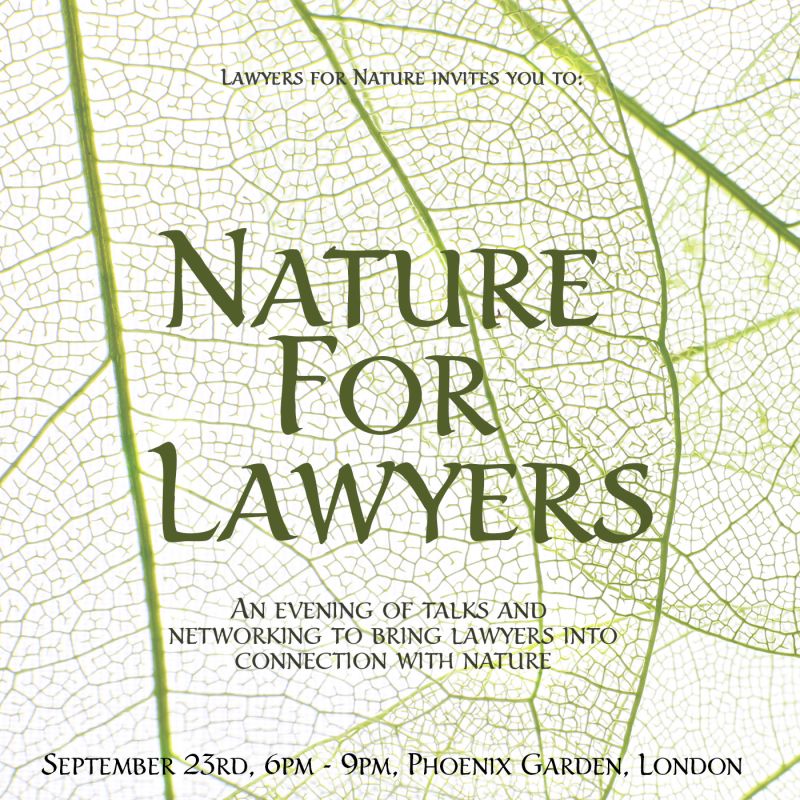
We are excited to update you about our event on Monday at the Phoenix Garden next week on Monday 23rd September. We have planned an evening of talks and discussion to connect nature, law and practice for us all. There will also be some delicious nourishing vegan food. There are still some tickets available so if you’d like to join us, we’d love to have you. To get tickets, click here.

The festival is three days of discussions about converting radical ideas into practical action, around the focus of our relationship with the rest of nature. Presented by House of Hackney, it's a festival of ideas and coming together of passionate advocates for the regeneration of Nature for the quality of life of all future generations.
