
We are excited to publish a new report based on the six month Nature Guardian pilot project by Comisiwn Seilwaith Cenedlaethol Cymru/National Infrastructure Commission for Wales (NICW). Authored by Brontie Ansell and Jessie Mond Wedd, the report examines the opportunities and challenges of representing Nature within governance structures and identifies a set of foundational principles to encourage and guide other public bodies interested in exploring this work. This report positions Wales, and the NICW, as a potential leader in expanding public sector governance to include the voice of Nature and future generations in decision making.
Viewing Nature as a stakeholder and having Nature represented in decision-making structures is a response to multiple, interconnected crises facing society, including biodiversity loss, climate change and systemic governance failures. Traditional decision making structures are no longer sufficient and new approaches are needed to govern our relationship with the natural world. The report outlines the Commission’s approach to this work, including running the pilot programme. It also explores the cultural and institutional context of Wales which contributed significantly to this work. It goes on to explore different forms of Nature Governance, specific considerations for Nature Governance in the public sector context and some principles and recommendations for Nature Representation in the public sector more generally.
Wales is uniquely positioned to lead in public sector Nature governance. The Nature Guardian pilot at NICW is a meaningful step towards recognising Nature as a stakeholder with a right to be represented. Carefully designed structures, multiple voices, transparency and learning can give Nature’s voice legitimacy and influence. The report calls for public bodies to be bold, to pilot, to iterate, and to share learning openly. Nature representation is a tool to support regeneration, restoration and a future in which human decision making actively supports the living systems on which all life depends.
The Nature Guardian pilot programme ran for six months, where Elspeth Jones was appointed as a Nature Guardian to the Commission. The Commission’s approach positioned the Nature role as an advisor or consultant, rather than a statutory or legal appointment. This enabled a rapid pilot programme, which allowed for flexibility and did not require legislative changes.This form of Nature Representation relies on institutional willingness to listen, rather than a legal obligation or statutory declaration and provides the Guardian with the ability to influence decisions, both formally and informally.
The report sets this work within a distinctive Welsh cultural, legal and institutional context. Wales has a long standing cultural connection to land and Nature, reflected in language, poetry, myth and place-based identity. Research into post industrial communities in Wales shows that local identity is often rooted as much in landscape and pre industrial heritage as in industrial history, with de-industrialisation sometimes understood as an opportunity for healing, regeneration and reconnection with Nature. This cultural context provides fertile ground for experimenting with new governance models that listen to Nature.
Wales is also notable for its progressive legislative framework. The Well-being of Future Generations (Wales) Act 2015 places a duty on public bodies to act in the interests of people not yet born and to take a long term, preventative and integrated approach to decision making. The Environment (Wales) Act 2016 establishes a statutory duty to maintain and enhance biodiversity and promote ecosystem resilience. National initiatives such as the Nature Recovery Action Plan and the Nature Networks programme further demonstrate an institutional commitment to Nature recovery. Despite this, biodiversity continues to decline and compliance with biodiversity duties remains inconsistent. The report argues that governance innovations, such as the Nature Guardian role, could strengthen the delivery of existing statutory obligations rather than create new burdens.
Although the Commission is uniquely placed to welcome a Nature Guardian and Nature Representation into its decision-making bodies, there are a range of constraints inherently placed on such a role in the public sector. Embedding the voice of Nature within public-sector governance brings complexities that are distinct from those faced by private organisations such as Faith in Nature or House of Hackney, and large banks and organisations who have the ability to create advisory positions with little regulatory oversight.
Public bodies operate within statutory frameworks, ministerial accountability and budgetary scrutiny, with decision-making shaped by procedural requirements, risk management, and political cycles. Unlike private businesses, which can amend articles of association relatively quickly, public-sector governance requires justification, evidence-based process, and in some cases, legislative change. Public bodies operate within legally defined mandates and procurement processes, which shape and sometimes limit the ability to legally embed experimental roles such as a Nature Guardian.
A legal appointment in the public sector, whilst being impactful, could result in lengthy negotiations and protracted time waiting for governments to be persuaded to pass legislation or legally appoint a Nature Guardian into a public body. Therefore different considerations are required to ensure an appointment (if it is not legally embedded in a particular constitution) has impact, longevity and meaning.
A core contribution of the report is the development of foundational principles for Nature representation in the public sector. These include the importance of ensuring a range of voices for Nature through access to external expertise, advisory panels, rotating or shared guardianship models and clear mechanisms for identifying when Nature related matters require deeper consideration. Accountability and transparency are emphasised through reporting, the right to dissent, clear records of influence, budgetary independence and ethical safeguards. The report also encourages embedding the role into the decision making structures through clear terms of reference, access to information, defined processes and protections against political change.
Learning, reflexivity and flexibility is needed. Nature representation is pioneering work that requires openness, iteration and the sharing of learning through communities of practice, peer review and public reporting. The report cautions against narrow measures of impact and highlights the value of cultural change, shifts in language and mindset, and long term influence. The importance of including art, culture and nature- positive language is also discussed. Historical parallels are drawn with early inclusion of women on corporate boards, where the significance lay not only in specific decisions but in the recognition of the right to be present and heard.
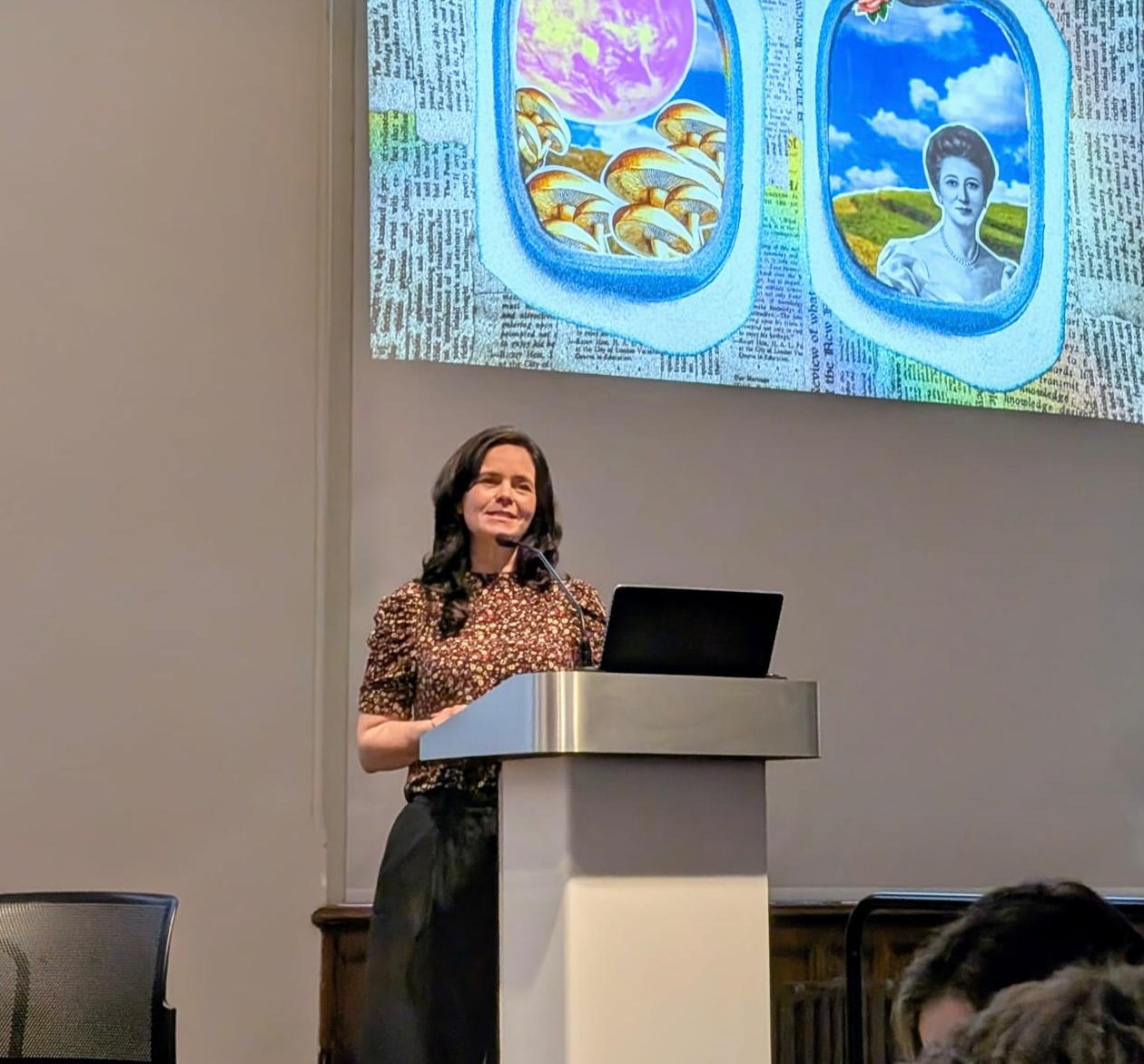
On 22 January Lawyers for Nature took part in an innovative and exciting event hosted by NICW and facilitated by Landed Futures to launch the findings of the Nature Representation pilot. There were speeches from Eurig Salisbury about the power of language and poetry in how we connect with Nature, Laura McAllister about re-defining governance, Elspeth Jones about her experience of being representative for Nature and our founder, Brontie Ansell about the power of storytelling in times of crisis.
The event took us forward in time to 2126 where we were able to reimagine a future which had been significantly impacted for the better by us all being more connected with Nature - within ourselves and by having Nature represented as a stakeholder within our organisations. Workshops allowed us to craft our nature-connected selves and to add words and phrases to a large paper doll which was the embodiment of the Nature guardian we would want to advocate for Nature within our organisations and decision making structures. Attributes suggested by the participants included: ‘wisdom’, ‘interconnectedness’, ‘courage’, ‘love’ and being ‘brave’ and ‘bold’.
NICW is applauded for the bold and innovative step to trial this nascent form of Nature governance in the public sector. We hope that other public sector bodies are inspired by their work and encouraged to do the same. We would be happy to talk to anyone interested in this work. Please reach out via our Connect page.
You can download the full report here.
.svg)
Share


In April 2022, the Irish Citizens’ Assembly on Biodiversity Loss (“The Assembly”) held its inaugural meeting in Dublin Castle. Since then, the Assembly, which is made up of 99 randomly-selected members of the public and an independent Chairperson, has been examining how the state can improve its response to biodiversity loss. On completion of its work later this year, the Assembly will make a number of recommendations to the Government in this regard.

LFN Researcher Alex May had a great time attending the Environmental Rights Centre for Scotland's Environmental Rights Summit yesterday. He delivered a workshop about what Rights of Nature are, developments around the world, and how we might advance them in the UK.

Magazine articles and blogs, conference videos and podcasts, books and films: we are awash with information and ideas, making it hard for any, however good, to break through. Occasionally, one does and, happily, that appears to be the case with Giving Nature a Seat on the Board.