
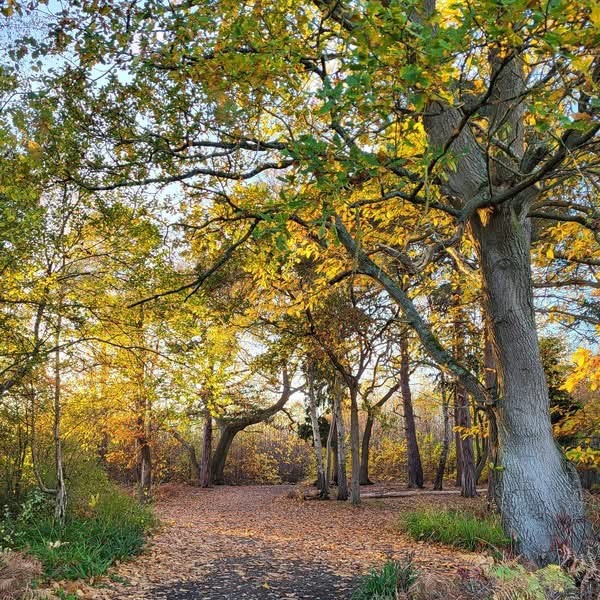
For over four hundred years, the ground beneath Oaken Wood in Kent has been a hub of ecological activity. Small fungal threads have been reaching out in the dark, creating a complex mycorrhizal network, linking trees and plants across the wood.
On the surface, this ancient woodland is also home to dormice, reptiles and invertebrates, while bats, tawny owls, nightingales and butterflies fly through the trees.
Ancient woodland is an area that has been continuously wooded since at least 1600. Remaining ancient woodland only covers 2.5% of the UK.
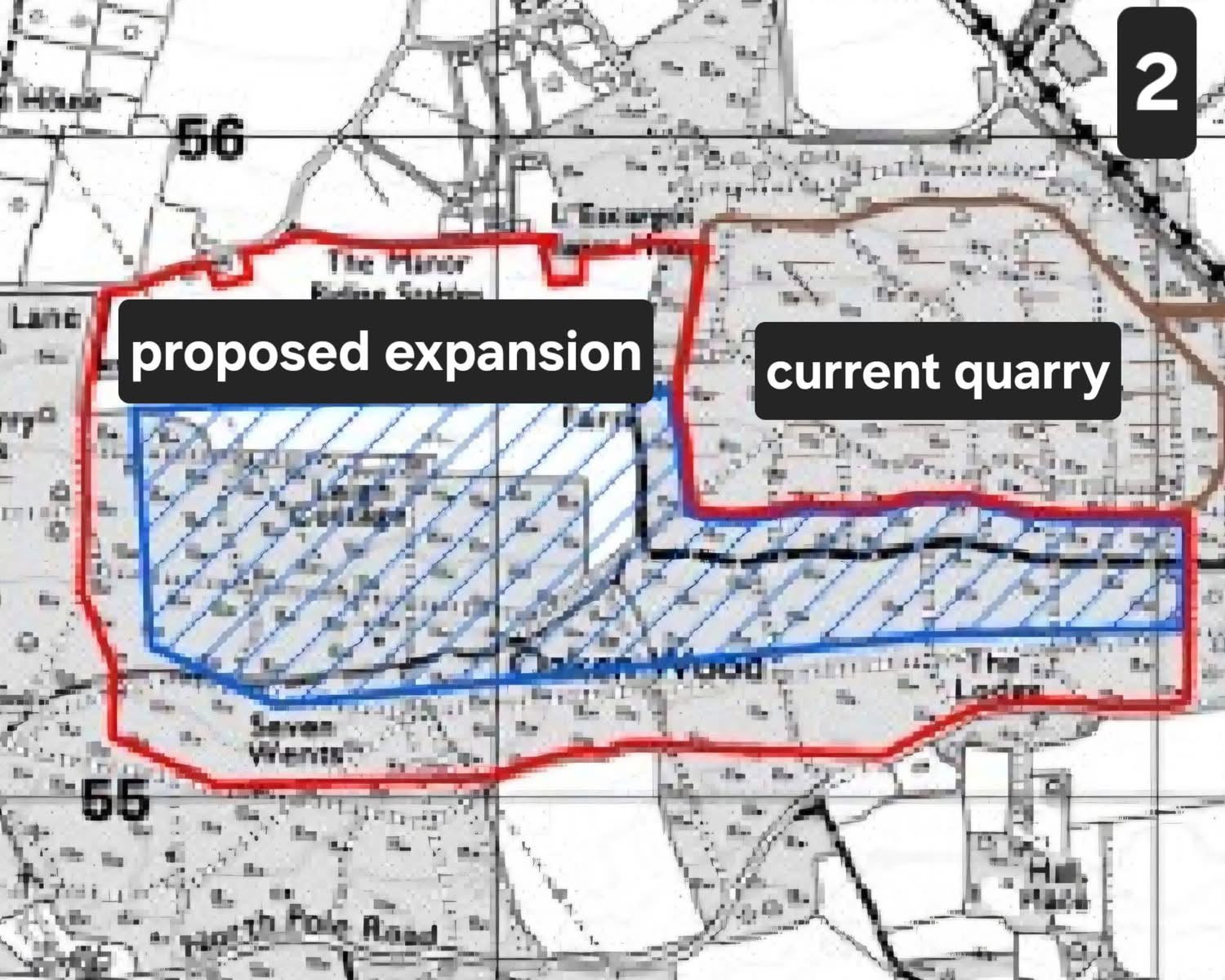
Despite its rarity and ecological value, Oaken Wood is under threat from plans to expand a nearby quarry; plans which, if green-lit, will dig up over 40 hectares of this ancient woodland. This would be greater than the losses from HS2 and the Lower Thames Crossing combined.
The quarry is looking to extract Kentish Ragstone, the stone used for landmarks, castles and churches all over the South East (including the Tower of London). Despite significant opposition, the site was allocated in Kent County Council’s Draft Mineral Sites Plan when the Council conducted a tense vote to approve the draft plan for public consultation and examination by an Inspector (For 37, Against 31, Abstain 4).
Why does this matter?
This summer, I joined Lawyers for Nature, to work on their Legal Aid for Nature programme, led by Brontie Ansell and Ketan Jha. We spent two months conducting research, tracking down documentation, and writing representations to attempt to save the woodland and to assist riends of Oaken Wood, the community group campaigning to protect this patch of ancient woodland in Kent.
We are committed to defending Nature and, while this allocation not only represents a huge loss of ancient woodland, there is also a real risk that the cost of this ecological destruction would not end with Oaken Wood. If this plan is approved and planning permission is granted for the quarry, it could be used to set a precedent that would result in justification for losses elsewhere and weaken protections for what little ancient woodland the UK has left.
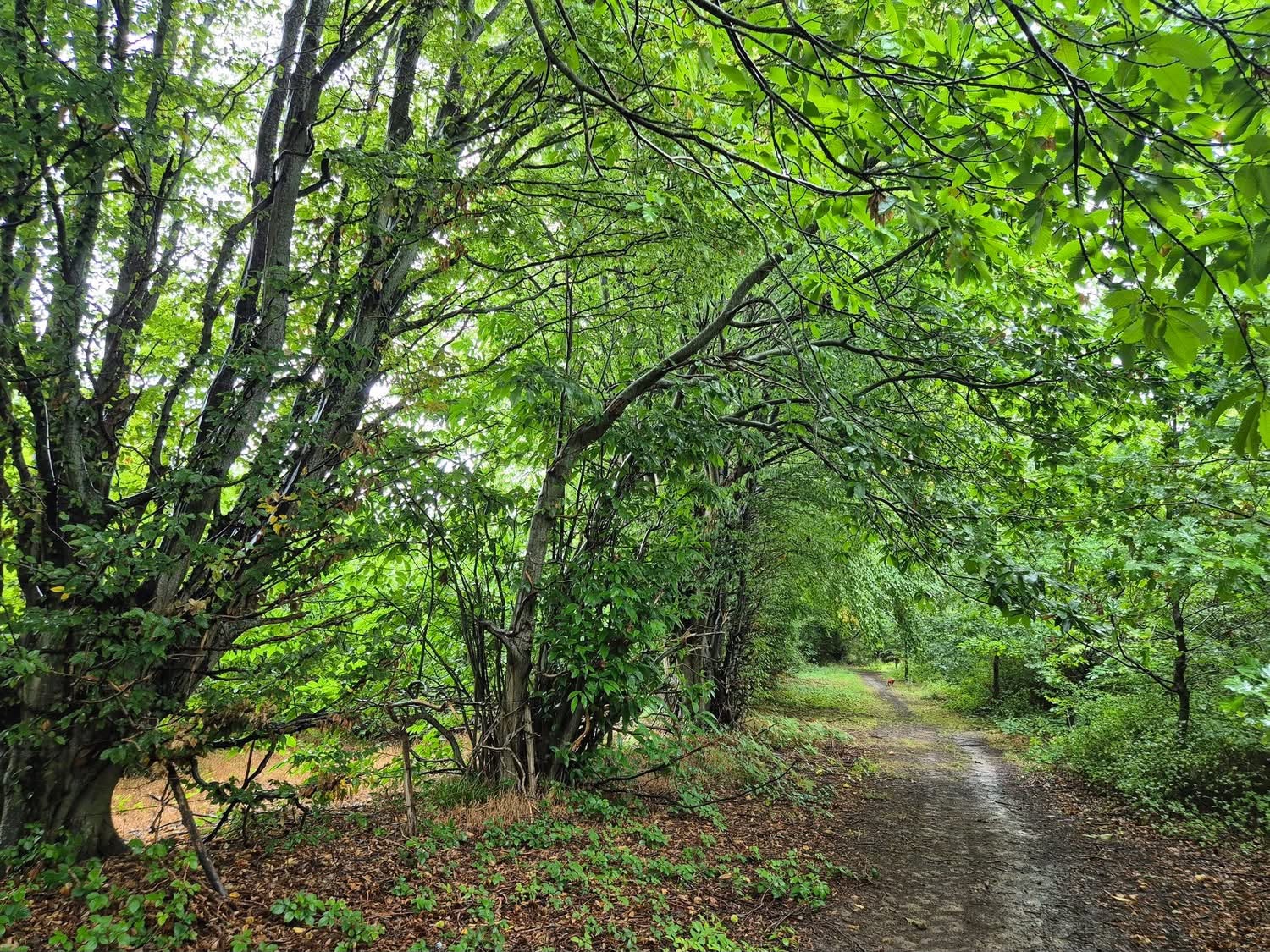
Oaken Wood is also particularly interesting as it is categorised as a ‘Plantation on Ancient Woodland Site,’ or ‘PAWS’ for short. This means that, at some point, the woodland was felled and replanted. It is currently managed as a sweet chestnut coppice. This has been used to suggest that the woodland is ‘poor quality,’ which is patently untrue. The coppice supports several declining bird species, and the soil remains undisturbed and ecologically rich. Ancient woodlands are also significant carbon sinks, storing centuries of carbon underground.
Haven’t we been here before?
Yes. In 2013, the Secretary of State approved the westerly extension of Hermitage Quarry, which removed around 31 hectares of the same wood. This decision was made under a weaker version of the test, set by an older version of national planning policy; the loss only had to be ‘clearly outweighed’ by the benefits.
This 2013 permission also relied in part on the promise of habitat creation elsewhere, achieved by moving the ancient woodland soils to new sites in a process called translocation. In 2018 the operator’s ecologists surveyed the area where the first ancient woodland soils were moved. They found it “largely populated by early colonising and opportunistic species”, which they said was “to be expected in the early stages”. Their reports for 2018, 2019 and 2020 each promised “updated ground flora surveys”, none of which have been reported. From 2021, the reports describe the area by its growing tree canopy and by the bramble, buddleia and broom being kept in check. Reference to ancient woodland plants growing in the moved soil is conspicuously absent from these reports. Growing bluebells and wood anemones are mentioned, but only in woodland that was never dug up, where they have come back after bramble was cleared. The legal agreement behind the 2013 permission also requires plant monitoring in fixed plots, reported to the Council every two years (see ‘Section 106 Legal Agreement - Redacted’ under ‘Decision’). We have asked the Council for those reports.
We haven’t argued that this translocation has failed but, thirteen years later, we haven’t seen any evidence that it has succeeded. For comparison, a study of a soil translocation at Biggins Wood near Folkestone has found that 25 years after the soils were moved to a receptor site, the plant community was still significantly different from the original, and five of the eighteen indicator species in the donor wood weren’t found.
What are the arguments?
Ancient woodland is classed as irreplaceable habitat. Paragraph 193(c) of the 2024 NPPF only allows it to be lost when there are ‘wholly exceptional reasons’ and a suitable compensation strategy. Our legal work for the woodland and for Friends of Oaken Wood argued the following:
This is only a summary of some of the key points made, but you can read the full representations on our website here.
How can I help?
While the consultation has now closed, if you would like to follow its progress, the Friends of Oaken Wood Facebook page will be providing updates, as will the council’s Kent Mineral Sites Plan 2026 webpage.
We provided all our legal assistance to Friends of Oaken Wood community group and the woodland pro bono, we rely on donations to be able to provide our Legal Aid for Nature work. If you would like to support our work at Lawyers for Nature, please click here to make a donation!

Share


When I was born, CO2 concentrations in the atmosphere were 348 parts per million. This year, the concentration rose to 421 PPM; the highest levels seen in 3 to 5 million years and far higher than any level previously experienced by human civilisation. The climate and ecological crises this simple fact gives rise to will be the single most important part of all our lives, whether we know it yet or not.
Biodiversity Net Gain (BNG) is not a perfect solution to the Nature crisis, and it requires robust safeguards to ensure it genuinely benefits Nature. However, it was introduced to help turn the tide on biodiversity decline, and it is now an essential tool that must be strengthened, not dismantled through sweeping exemptions that would render it largely ineffective.
