This post is also available on Bates Wells' website.
Magazine articles and blogs, conference videos and podcasts, books and films: we are awash with information and ideas, making it hard for any, however good, to break through. Occasionally, one does and, happily, that appears to be the case with Giving Nature a Seat on the Board.
The traction this idea is gaining lies in no small measure on enjoying the following characteristics:
It has certainly caught the attention of not only existing businesses, large and small, but investors, and charities, too.
The idea and its execution are down to a not for profit organisation called Lawyers for Nature CIC (which if you're reading this, you may already know) and they have plenty more where that came from, not least developing rights of nature to have similar status to human rights. Here, though, we will focus on Nature on the Board and how this has been converted from a quaint concept to a radical corporate governance intervention by the company Faith in Nature.
Faith in Nature has adapted its articles of association in the following ways which, cumulatively, ensure that the hitherto voiceless stakeholder, Nature, is represented in relevant decision making.
This is a pretty comprehensive set of measures. They are not entrenched (that is, the members of the company could vote by a 75% majority to remove them from the articles in the future) but entrenchment is relatively rare and could be added in the future if the members are pleased with how this plays out in practice.

There are also qualifications included to recognise that there may be circumstances where other considerations may carry greater weight and the directors do have the flexibility to take that into account in their decision making. They do not lose their discretion to exercise their judgment, but they will rarely have the excuse of pleading ignorance of potential environmental consequences given the processes now embedded in the company’s governance.
This intervention raises some fascinating issues. These relate to how other companies – and even governments and other public bodies – may respond. With work ramping up around the Taskforce for Nature Related Financial Disclosures and concepts like Biodiversity Net Gain finding their way into legislation, even large listed companies may consider it is worth exploring how Nature on the Board may assist their decision making in the future.
There is a growing acknowledgement in corporate and investor circles of the extent to which business is reliant on a stable and productive environment and that using it as a free resource or dumping ground creates systemic harms that will ultimately affect the polluters too. In a world of heightened sensitivity to accusations of greenwashing, this model is not immune from abuse but if exposed, the fallout would be catastrophic and generally its adoption should be a pretty strong sign of good faith.
It will be interesting to see whether other stakeholders seek to emulate this example. Those most likely to feel challenged by it are investors (already very well represented on boards) and employees (who in some cases have seats on boards but very much as the exception). Generally, one might assume boards should be sophisticated enough to identify other stakeholder interests, whereas those of Nature can often have technical elements, particularly in relation to interdependencies, which would be beyond a board’s typical sphere of knowledge. Plus, of course, Nature does not itself have any direct legal personality.
It is possible to imagine, if the idea becomes sufficiently widespread, that a network of Nature Guardians develops able to share knowledge about challenges to Nature arising from corporate practice and ways of navigating them; acting as a voice for Nature in corporate contexts in the public discourse; and advocating for policy and regulatory change where desirable to shift corporate practice more generally.
It also invites us to consider the concept of fiduciary duty more widely: what are our duties, individually and collectively, to those affected by how we live and work – not only the rest of the natural world but those who will come after us? And can we align the law with justice to achieve a better balance of interests in the future?
This is an exciting new development, which we can see being replicated and taken up by a number of radical businesses. Putting Nature on your board is a perfect example of how a charity, social enterprise, B Corp or other business might wish to ‘go beyond’ and embed deep consideration of Nature in its governance. So, if you would like to put Nature on your board, please do get in touch!
David Hunter applies his legal skills and business experience to help clients committed to social and environmental change. He works with Bates Wells, a purpose-driven law firm and the first in the UK to certify as a B Corp, and is a member of The Law Society’s Climate Change Working Group.
.svg)
Share


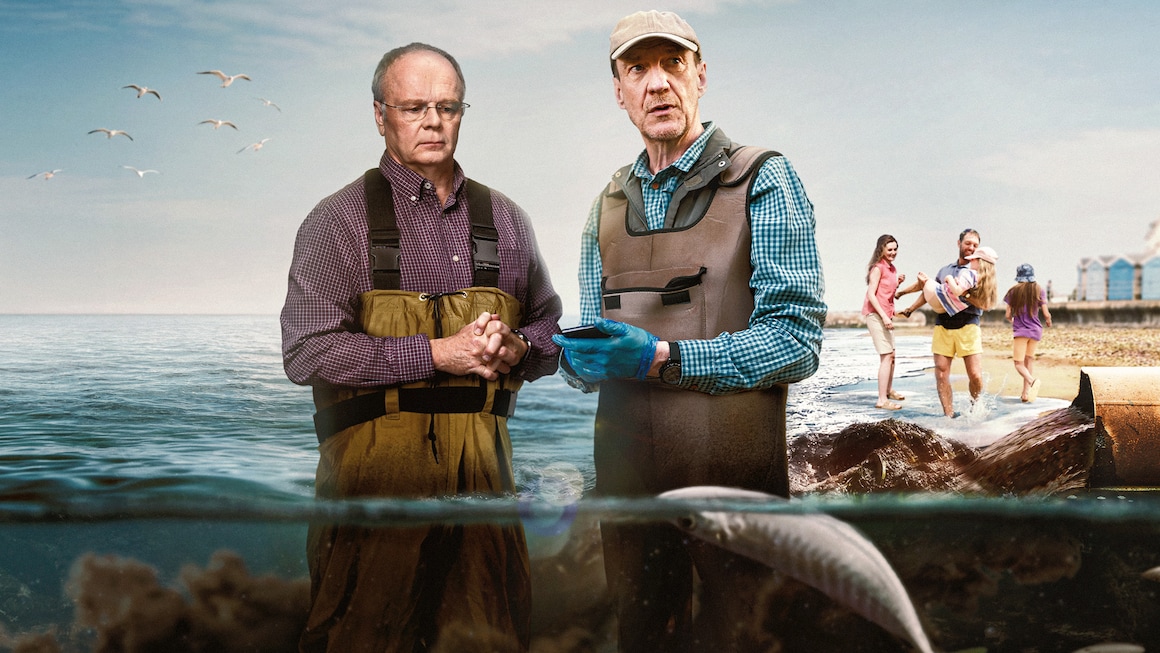
This week, Dirty Business aired on Channel 4. It tells a story many of us already know deep in our bones: Britain’s rivers are being illegally polluted on an industrial scale, and ordinary people have had to step in where government and institutions have failed.
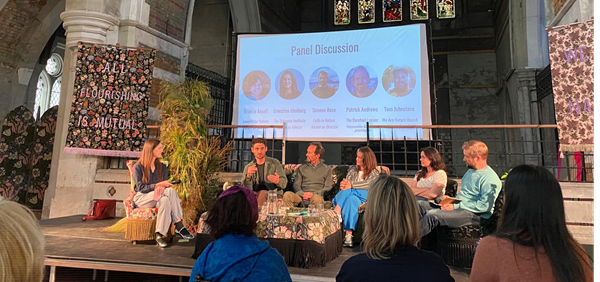
We’ve been reflecting on our time at the Garden of Tomorrow from House of Hackney. As a neurodiverse bunch, we at Lawyers for Nature need to take time to rest and digest after we participate in incredible events like this one. We leave this glorious 3-day festival with the following.